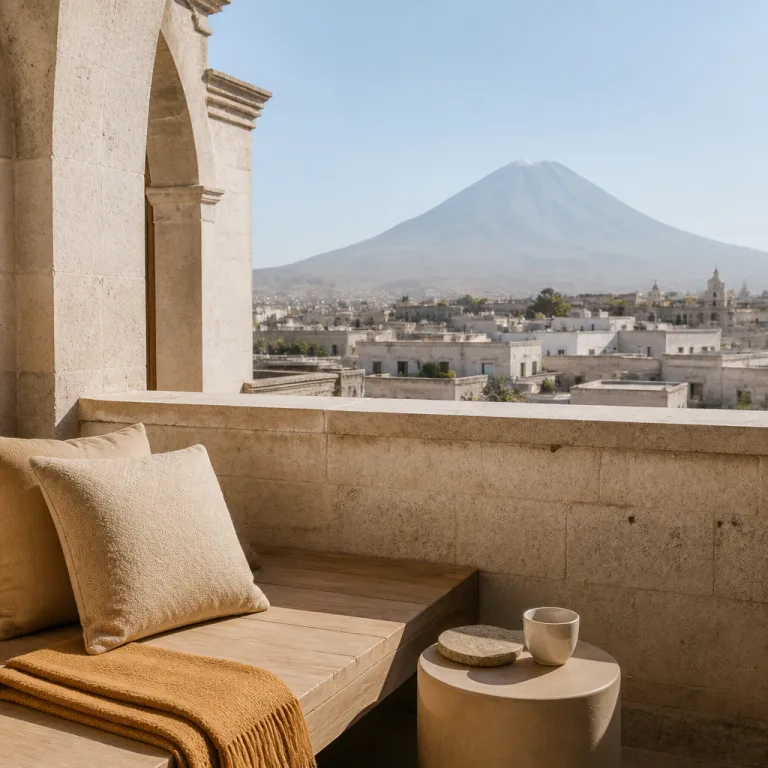
Understanding Arequipa Peru altitude for a refined Andean stay
Arequipa Peru altitude shapes every refined stay in this luminous white city. At around 2,335 meters (7,661 feet) above sea level, the city’s elevation offers a gentler introduction to the Andes than Cusco yet still feels thrillingly high. This balance matters for travelers who want luxury, culture, and comfort without being overwhelmed by high altitude on the first day.
When you visit Arequipa, Peru reveals a different Andean rhythm that rewards slow travel and thoughtful planning. The historic center, framed by volcanic peaks, lets travelers experience elevation without the harsher symptoms sometimes felt in Cusco or near Lake Titicaca. Many premium hotels design wellness programs around the local altitude, combining oxygen-enriched lounges, herbal infusions, and light Andean menus tailored to guests arriving from sea level.
Because Arequipa Peru altitude is lower than the elevation of Cusco, it works beautifully as an acclimatization stop. “Is Arequipa higher than Cusco?” and “How long to acclimate in Arequipa?” are questions luxury concierges hear daily from travelers planning several days in Peru. The official answers — “Is Arequipa higher than Cusco? No, Cusco is at about 3,399 meters; Arequipa is at roughly 2,335 meters.” and “How long to acclimate in Arequipa? Typically 1–2 days.” — guide how many nights you should book in the white city before continuing toward Machu Picchu or Lake Titicaca. As one Lima-based travel physician notes, “A night or two in Arequipa can make the difference between a rushed, uncomfortable start and a graceful ascent into the high Andes.”
Choosing luxury hotels in Arequipa’s historic center and white city quarters
In the historic center of Arequipa, Peru altitude meets colonial elegance in restored mansions of white sillar stone. Many of the finest luxury hotels sit within walking distance of Plaza de Armas, where the cathedral and arcades glow softly at night. Staying near this plaza allows travelers to limit exertion on the first day while still enjoying the city’s atmosphere at a comfortable elevation.
Discerning guests often request suites that face the volcanoes, because the high Andean light over Misti and Chachani is unforgettable. From these rooms, the relationship between Arequipa’s elevation and the surrounding peaks becomes visually clear, helping travelers understand how the city’s altitude compares with Cusco, Puno, or the higher reaches of Colca Canyon. Premium properties in Peru Arequipa now integrate altitude awareness into pre-arrival communication, explaining meters–feet conversions and suggesting how many days to spend before moving to higher city stays. Hotels such as CIRQA – Relais & Châteaux and Casa Andina Premium Arequipa openly highlight oxygen availability, light arrival menus, and flexible check-in for guests adjusting to the Andes.
When planning a broader itinerary that includes Arequipa, Cusco, and the Sacred Valley, it is wise to think in terms of a gentle altitude staircase. Many travelers now pair a refined stay in the white city with a few nights in high-end properties in Cusco that specialize in Andean wellness and gastronomy, and you can explore an elegant guide to the best hotels in Cusco for a refined Andean stay through a dedicated luxury resource. This approach lets you enjoy the city of Arequipa at moderate elevation first, then ascend to the higher altitude of Cusco and finally continue toward Machu Picchu or Lake Titicaca with fewer symptoms of altitude sickness.
Arequipa as an acclimatization hub between Lima, Cusco, and Lake Titicaca
Many international travelers land first in Lima, where sea-level conditions offer an easy start before heading into the Andes. From Lima to Arequipa, Peru altitude rises gradually, and this progression is ideal for guests who value comfort as much as scenery. A well-planned route Lima – Arequipa – Sacred Valley – Cusco – Lake Titicaca reduces the risk of altitude sickness while still delivering Peru’s most iconic landscapes.
Because Arequipa altitude is significantly lower than the elevation of Lake Titicaca or the highest passes on the Inca Trail, it serves as a strategic pause. Luxury concierges often recommend two nights in the white city, then two or three days in the Sacred Valley before sleeping in the higher city of Cusco. This itinerary allows your body to adjust step by step, so that by the time you reach Machu Picchu or board a train toward the Cusco–Puno corridor, symptoms of high altitude are usually milder.
Guests planning a premium visit to Machu Picchu often ask whether they should go directly from Lima to Cusco or include Arequipa Peru altitude in their journey. For those sensitive to elevation, adding Arequipa and the Sacred Valley before tackling the high altitude of Cusco and the Inca Trail is a wise choice, and a specialist guide to planning the best time to visit Machu Picchu for a luxury Peru stay can help align weather, crowd levels, and acclimatization. One traveler described her route Lima – Arequipa – Sacred Valley – Cusco as “a staircase my body could actually climb,” turning a potentially tiring schedule into a graceful progression through Peru’s most celebrated regions.
Managing altitude sickness: practical guidance for luxury travelers in Arequipa
Even though Arequipa Peru altitude is moderate compared with Cusco or Lake Titicaca, some travelers still feel mild altitude sickness. Symptoms can include light headache, slight nausea, or disturbed sleep during the first night at elevation. High altitude affects everyone differently, so even guests arriving from Lima at sea level should plan their first day in the city with care.
Top-tier hotels in Peru Arequipa now integrate medical-grade support into their guest experience, working with local professionals who understand Andean physiology. Many properties offer coca tea on arrival, oxygen-enriched lounges, and even portable altitude chambers for guests who are particularly sensitive. Staff are trained to recognize early symptoms of altitude sickness, and they will gently suggest rest, hydration, and lighter meals if a traveler shows signs of discomfort.
Expert advice remains consistent across the region: rest upon arrival, stay hydrated, and avoid heavy alcohol on the first day at Arequipa altitude. Guests planning onward travel to the higher elevation of Cusco, the Sacred Valley, or the Colca Canyon should allow at least one or two days in the white city before ascending. This measured approach means you can still stroll through the historic center, enjoy a refined dinner, and prepare for Machu Picchu or Lake Titicaca without compromising your health or your enjoyment of Peru. The World Health Organization’s guidance on high-altitude travel echoes this, recommending gradual ascent and attentive monitoring of symptoms above 2,000 meters, and travel-medicine references such as the CDC’s Yellow Book reinforce the same principles for Andean itineraries.
Colca Canyon, Arequipa Colca routes, and high altitude excursions
From Arequipa, Peru altitude rises dramatically as you travel toward the Colca Canyon, one of the deepest canyons on earth. The road from the white city to the highest viewpoints can reach close to 4,900 meters, which is significantly higher than the city of Arequipa itself. This jump in elevation means that even well-acclimatized travelers should plan their Arequipa–Colca excursions with care.
Luxury lodges in the Colca Canyon region now coordinate closely with premium hotels in Peru Arequipa to design gradual itineraries. Many itineraries suggest one or two days in Arequipa, then a slow drive with scenic stops where guests can stretch, hydrate, and adjust to the increasing altitude. At Patapampa (Abra Patapampa), for example, the road crosses a high pass at roughly 4,910 meters (16,109 feet), so attentive guides monitor travelers closely and will adjust the pace or route if anyone feels unwell.
Because the Colca Canyon sits higher than Cusco and even some sections of the Cusco–Puno route, it is essential to understand meters–feet conversions when reading hotel descriptions or trail information. A property listed at 3,600 meters will feel very different from one at 2,335 meters in Arequipa Peru, especially for guests arriving from Lima at sea level. Choosing high-end lodges that offer oxygen, spa facilities, and flexible excursion schedules can transform a challenging high-altitude environment into a serene extension of your white city stay.
Designing a luxury itinerary: from Arequipa’s historic center to Machu Picchu
A refined journey through Peru often begins with a few days in Arequipa’s historic center, where altitude is gentle enough to allow leisurely exploration. From a terrace near Plaza de Armas, you can watch the light shift over the cathedral and understand why the white city has become a favorite among sophisticated travelers. Many luxury hotels here organize private walks through the Santa Catalina Monastery, evening tastings, and curated visits to lesser-known courtyards.
After adjusting to Arequipa altitude, guests typically continue toward the Sacred Valley and Cusco, where the elevation is higher but the rewards are immense. In Cusco, altitude is more intense, yet the city offers exceptional dining that now rivals Lima, and a detailed feature on how Cusco’s kitchen steps out of Lima’s shadow highlights hotels where gastronomy and Andean heritage meet. From there, you can board trains or helicopters toward Machu Picchu, or even combine a short section of the Inca Trail with a stay in a riverside lodge.
Throughout this journey, understanding Arequipa Peru altitude helps you decide how many days to spend in each city and which properties best match your comfort level. A guest who feels strong at 2,335 meters in the white city may still prefer to sleep lower in the Sacred Valley before tackling Machu Picchu or the highest points of the Inca Trail. By aligning hotel choices with elevation, you transform altitude from a source of sickness and symptoms into a subtle design element that shapes an elegant, well-paced exploration of Peru.
Key altitude figures for Arequipa and nearby destinations
- Arequipa sits at roughly 2,335 meters above sea level, which makes the white city lower than Cusco but high enough that some travelers may feel mild altitude sickness during the first day.
- Cusco’s elevation is about 3,399 meters, so moving from Arequipa Peru altitude to this higher city represents an increase of more than 1,000 meters, and many experts recommend at least one or two days of acclimatization before the change.
- The highest passes on the road between Arequipa and the Colca Canyon can approach 4,900 meters, which is significantly higher than both the historic center of Arequipa and the Sacred Valley, so itineraries should include rest stops and careful monitoring of symptoms.
- Lake Titicaca lies at around 3,800 meters, meaning that travelers coming from Lima at sea level often benefit from spending several days in Arequipa or the Sacred Valley first to reduce the risk of altitude sickness.
- Most travelers adapt to Arequipa altitude within one to two days, and this timeframe aligns with medical guidance that suggests gradual ascent and attentive hydration when moving from sea level to elevations above 2,000 meters.
FAQ about Arequipa Peru altitude and luxury travel
Can altitude sickness occur in Arequipa even though it is lower than Cusco ?
Yes, altitude sickness can occur in Arequipa because the city stands at more than 2,000 meters above sea level, and some travelers are sensitive even to moderate elevation. Symptoms are usually mild compared with higher places such as Cusco or Lake Titicaca, but headaches, light nausea, or fatigue can still appear. Booking a hotel that offers oxygen, coca tea, and flexible check-in times helps you manage the first day more comfortably.
How many days should I stay in Arequipa before going to higher altitude ?
Most travelers benefit from spending one to two days in Arequipa before moving on to higher destinations such as the Colca Canyon, the Sacred Valley, or Cusco. This duration matches medical advice on gradual acclimatization and allows you to enjoy the historic center without rushing. If you have a history of altitude sensitivity, consider adding an extra day in the white city or scheduling a rest day before long excursions.
Is Arequipa a good starting point for visiting Machu Picchu and the Inca Trail ?
Arequipa can be an excellent starting point for a luxury itinerary that includes Machu Picchu and sections of the Inca Trail, especially if you prefer to acclimatize gradually. By beginning in the white city, then continuing to the Sacred Valley and finally to Cusco, you ascend in stages rather than jumping directly from sea level to high altitude. This approach reduces the likelihood of altitude sickness and lets you enjoy premium hotels and curated experiences at each elevation.
How does Arequipa altitude compare with Lima, Cusco, and Lake Titicaca ?
Lima sits at sea level, so there is effectively no altitude challenge there, while Arequipa rises to more than 2,000 meters and feels distinctly Andean. Cusco and Lake Titicaca are both higher than Arequipa, with elevations above 3,300 meters, which is why symptoms of altitude sickness are more common in those regions. Using Arequipa as an intermediate stop between Lima and these higher destinations is a practical way to protect your comfort.
What should I ask my hotel in Arequipa regarding altitude support ?
When booking a luxury hotel in Arequipa, ask whether they provide oxygen on request, coca tea, or medical assistance if symptoms appear. It is also helpful to know if late check-out is possible, so you can rest longer on your first day at Arequipa Peru altitude. Properties that proactively explain elevation in meters–feet and offer tailored advice for onward travel to Cusco, the Colca Canyon, or Lake Titicaca tend to deliver the most reassuring experience.
References
- The Only Peru Guide – Altitude information for Arequipa and Colca Canyon
- Peru’s Ministry of Foreign Trade and Tourism – Official visitor data and safety recommendations
- World Health Organization – Guidance on high altitude travel and acclimatization