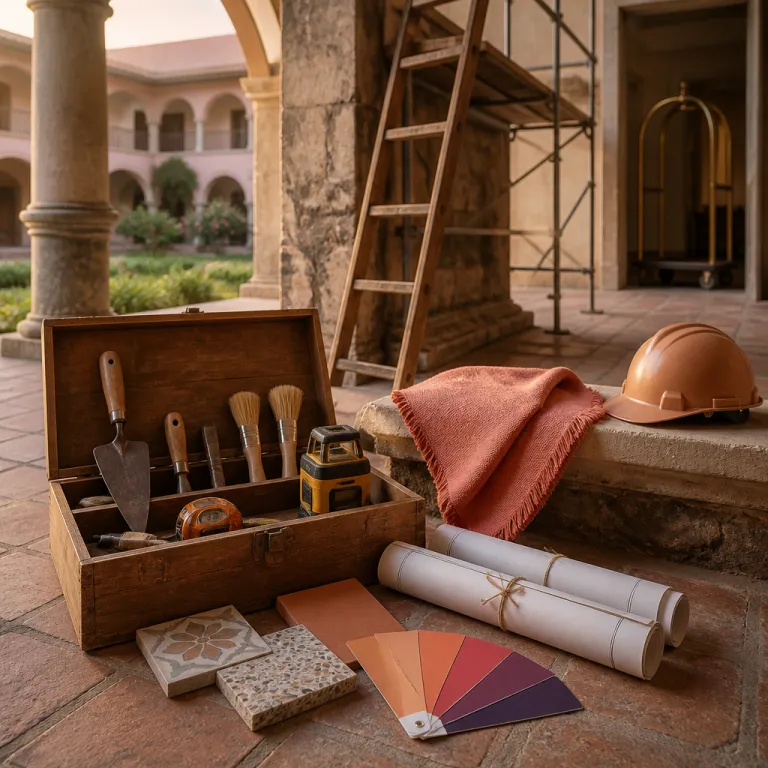
Why converted historic buildings hotels in Peru command such loyalty
In Peru, the most memorable luxury hotels are often the ones that were never meant to be hotels at all. These converted historic buildings hotels in Peru turn stone, timber and cloistered courtyards into a kind of living archive, where every corridor quietly retells peruvian history while still meeting the expectations of a demanding executive on a tight schedule. When you choose one of these luxury hotels, you are not just booking a room in a city ; you are buying into a narrative that has been built, erased and rebuilt across more than one century.
The appeal starts with architecture but ends with emotion, which is why converted historic buildings hotels in Peru consistently achieve higher guest satisfaction scores than many new builds. A former convent or colonial administration building carries an atmosphere that no amount of contemporary design can fully replicate, and the best hotel teams know how to fill that atmosphere with discreet service rather than themed nostalgia. For business leisure travelers who split their time between boardrooms in Lima Peru and long weekends in the Sacred Valley, that blend of efficiency and depth is precisely what justifies a premium nightly rate.
These properties also anchor you geographically, not just aesthetically, because most sit inside the historic centre of their respective cities. In Cusco Peru, a hotel cusco housed in a sixteenth century seminary places you steps from Plaza San and the Inca foundations that still shape the street grid, while in Lima the right hotel in the city centre lets you walk from a restored mansion straight to a San Martín era plaza in under ten minutes. Across valley Peru, from the Sacred Valley to Colca Canyon and even the shores of Lake Titicaca, adaptive reuse has become the quiet signature of the country’s most characterful luxury hotels.
Belmond’s Cusco trilogy: seminary, palace and the layered city beneath
Belmond Hotel Monasterio is the clearest expression of how converted historic buildings hotels in Peru can turn constraint into theatre. The property occupies a seminary built in 1592 around a cloistered courtyard, where cedar trees more than 300 years old rise above the stone arcades and soften the high altitude light that can feel harsh in Cusco Peru. After major earthquakes reshaped the city, the building was painstakingly reinforced, and engineers found Inca walls buried beneath the foundations that now quietly support one of the most atmospheric luxury hotels in the Andes.
Staying here is not about monastic austerity ; it is about how Belmond has layered comfort onto history without erasing it. Oxygen enriched rooms help guests acclimatise to 3 400 metres, while the chapel turned event space still carries baroque paintings that remind you this was once a training ground for priests, not a luxury collection of suites. For travelers following a carefully staged ascent itinerary from sea level to the highlands, pairing a night in Lima Peru with a stay at this hotel cusco is a smart way to respect altitude science, and you can plan that progression in detail using this guide to building the ascent itinerary that protects your Peru trip: high altitude hotel strategy in Peru.
Just next door, Palacio Nazarenas tells a parallel story that deepens the sense of place for guests who care about architecture as much as amenities. This former Inca noble residence became a convent and then a Belmond spa hotel, and today you can literally read three civilisations in its walls, where Inca stonework, colonial plaster and early republican interventions remain deliberately visible. Together, Belmond Hotel Monasterio and Palacio Nazarenas form a kind of open air museum of Cusco’s historic centre, proving why converted historic buildings hotels in Peru are often the most efficient way to understand a city in a single stay.
Global brands, local stones: JW Marriott and the new Lima narratives
Not every example of converted historic buildings hotels in Peru belongs to a heritage specialist like Belmond or Inkaterra. In Cusco city, the JW Marriott El Convento Cusco occupies a sixteenth century Dominican convent, where vaulted brick ceilings and cloistered walkways have been adapted to meet strict brand standards without diluting the building’s character. The result is a hotel cusco that feels recognisably Marriott in service culture yet unmistakably peruvian in material, from the stone arches in the lobby to the small museum that showcases artefacts unearthed during restoration.
For business travelers loyal to international loyalty programs, this balance matters, because it allows them to earn points while still engaging with the history beneath their feet. Rooms are compact by convent standards but cleverly designed, and the public spaces preserve the sense of enclosure that once defined monastic life, turning the cloister into a social centre rather than a religious one. This is where converted historic buildings hotels in Peru show their commercial intelligence ; the story becomes an amenity that justifies a higher average daily rate while still delivering the reliability expected from a global luxury collection brand.
Lima is now entering this conversation with the Melia Collection Lima at Casa de la Pila, a project that will transform the birthplace of the El Comercio newspaper into one of the capital’s most interesting luxury hotels. Set in the historic centre near Plaza San Martín, the building once housed the presses that shaped public opinion in Lima Peru, and the new cultural program aims to preserve that intellectual heritage through salons, readings and partnerships with local editors. If you are planning a circuit that includes Arequipa, where this elegant guide to high end stays in the white city offers detailed advice on heritage properties, you can read more here: Arequipa altitude and historic hotels.
From haciendas to valle sagrado lodges: when the landscape is the lobby
Outside the major city centres, converted historic buildings hotels in Peru often take the form of haciendas that once controlled vast agricultural estates. In the Sacred Valley, properties like Belmond Rio Sagrado, Explora Valle Sagrado and other lodges in the Valle Sagrado reinterpret the traditional hacienda layout, with low slung buildings that follow the contours of the river and frame views of terraced hillsides that still feed local communities. Here the luxury is not marble and chandeliers but silence, altitude softened light and the ability to step from your suite directly onto a path that leads to a small chapel or an early colonial granary.
These hacienda style luxury hotels sit at a comfortable mid altitude between Lima Peru and Machu Picchu, which makes them ideal acclimatisation stops for travelers who want to avoid going straight from sea level to Cusco Peru. Many were built on or near pre Hispanic sites, and the best operators acknowledge that layered history rather than romanticising only the colonial chapter, using local guides to explain how Inca irrigation channels still feed the fields that surround the property. In valley Peru more broadly, from the Colca Canyon to the shores of Lake Titicaca, adaptive reuse projects are starting to treat the landscape itself as a historic building, with trails, stone walls and agricultural terraces integrated into the guest experience.
Inkaterra Casona in Cusco offers a more urban expression of this hacienda logic, with a central courtyard that acts as an outdoor living room and thick stone walls that keep the temperature stable year round. As one of the earliest luxury hotels to embrace adaptive reuse in the city, it helped set the tone for how converted historic buildings hotels in Peru could combine serious conservation work with contemporary comfort. If you are curious about how these properties translate terroir into cuisine, this in depth look at the hotels where Andean dining steps out of Lima’s shadow is an essential companion to your planning: Cusco’s hotel dining evolution.
Paying for the story: pricing, ethics and how to choose
Converted historic buildings hotels in Peru almost always sit at the upper end of the rate spectrum, and there are clear reasons for that. Restoring a centuries old building in a seismic country like Peru requires specialist engineering, artisanal craftsmanship and constant maintenance, all of which quietly fill the operating budget long after the opening party has ended. When you pay a premium at a place like Belmond Hotel Monasterio, Palacio Nazarenas or Inkaterra Casona, you are funding not just your own stay but the preservation of a fragile historic centre that might otherwise be carved into anonymous apartments.
There is also an ethical dimension that thoughtful travelers increasingly weigh when choosing between luxury hotels. Properties built on former haciendas in the Sacred Valley or along the Colca Canyon carry complex histories of land ownership, and the most responsible operators address this openly through interpretation, community partnerships and transparent hiring practices. In the best cases, converted historic buildings hotels in Peru become engines for local employment and cultural preservation rather than monuments to a single century of dominance, and you should not hesitate to ask how a hotel engages with nearby villages before you book.
From a practical standpoint, the story is an amenity that can be measured in both guest satisfaction scores and repeat visitation. Executives extending a work trip in Lima Peru often choose a historic centre property for the weekend because the narrative density per night is simply higher than in a new build tower, especially when that stay is paired with a carefully chosen hotel cusco before continuing to Machu Picchu or Lake Titicaca. As you compare options across city hotels, valley Peru lodges and lakeside retreats, treat the building’s biography as seriously as you would its spa menu or Wi Fi speed ; in Peru, the walls really do remember, and the best stays are the ones that let you listen.
FAQ
Are converted historic buildings hotels in Peru suitable for business travelers
Many converted historic buildings hotels in Peru are well suited to business leisure travelers who need reliable Wi Fi, quiet workspaces and efficient service. Properties in Lima’s historic centre and in Cusco city often combine heritage architecture with modern meeting rooms and strong connectivity. If you plan to work remotely at altitude, choose a hotel cusco that offers oxygen enriched rooms and flexible check in times.
How should I plan altitude when staying in Cusco and the Sacred Valley
The safest strategy is to move gradually from sea level in Lima Peru to mid altitude in the Sacred Valley before sleeping in Cusco Peru. Many travelers spend one or two nights in valley Peru at properties like Rio Sagrado or Explora Valle Sagrado before continuing to a hotel cusco in the historic centre. This stepwise ascent reduces the risk of altitude sickness and makes visits to Machu Picchu and Lake Titicaca more comfortable.
Do adaptive reuse hotels cost more than new build luxury hotels
Rates at converted historic buildings hotels in Peru are often higher than at comparable new build luxury hotels because restoration and maintenance costs are significant. Guests are effectively paying for both the room and the preservation of a rare building, whether that is a former convent, palace or hacienda. In return, they gain access to spaces and stories that cannot be replicated elsewhere in the city or valley.
What should I look for when choosing a historic hotel in Peru
Start by checking the building’s history, location within the historic centre and how transparently the hotel presents its past. Look for clear information about seismic reinforcement, accessibility and community engagement, especially in hacienda style properties in the Sacred Valley or Colca Canyon. Reading detailed reviews focused on service, noise levels and room layout will help you decide whether a specific property matches your expectations for both comfort and character.
Are historic hotels in Peru appropriate for families
Many converted historic buildings hotels in Peru welcome families, but layouts can be less flexible than in modern towers. Some properties offer connecting rooms or spacious suites around a central courtyard, which works well for multi generational trips to Cusco or the Sacred Valley. Always confirm bed configurations, stair access and child friendly facilities before booking, especially in very old buildings with uneven floors or narrow corridors.
Sources
PromPerú ; UNESCO World Heritage Centre ; Peru’s Ministry of Culture.